Want to make a real impact? Become a policy entrepreneur

One man, with no mandate, budget or staff, changed how cities from Drachten to London and Auckland design their streets. That made him a policy entrepreneur: someone who takes responsibility for a problem, starts small, gathers evidence and keeps pulling at institutions until something changes. On Hans Monderman, Hack Your Bureaucracy and why policy entrepreneurship may be the most underrated career path for young people who want to make an impact.
This article was translated from Dutch by AI (see our AI disclaimer). Read the original Dutch version.
“As you become an adult, you realize that things around you weren’t just always there; people made them happen. But only recently have I started to internalize how much tenacity everything requires. That hotel, that park, that railway. The world is a museum of passion projects.”– John Collison
At first glance, the Laweiplein in Drachten does not have much to offer. The junction consists of a compact roundabout with a raised, bare patch of grass in the middle, flanked by the local Randstad temp agency on one side and Peking, a Chinese-Indonesian restaurant, on the other. A row of burbling little fountains along the carriageway is the only decoration. What stands out more is what is missing: traffic lights.1
The average passer-by has little reason to suspect that this somewhat dreary little square was once the starting point of an international crusade to reinvent the relationship between cars and their surroundings. The Laweiplein found imitators from Exhibition Road in London’s chic Kensington all the way to Auckland, New Zealand – the result of a decades-long campaign waged almost single-handedly by one stubborn traffic safety inspector from Leeuwarden.2
His name was Hans Monderman. His shared space philosophy – the idea that the best way to promote road safety is to remove as many traffic signs, traffic lights and speed bumps as possible, so that drivers are forced to stay constantly alert – was a radical reversal of the prevailing understanding of road safety.
Unlike most ideas about spatial planning, shared space was not born at a drawing board but in practice. In the mid-1980s Monderman was sent to the Frisian village of Oudehaske, where two children had been killed on a through road. In the preceding decades the number of road deaths in the Netherlands had grown along with car ownership, to well over three thousand a year in the early 1970s. Whenever another tragic accident had happened somewhere, it fell to traffic safety inspectors like Monderman to reassure the local community with an extra stop sign.
Shortly before he arrived, the village had laid red brick paving in a few streets and removed the traffic signs – a trial balloon to make the streets look more ‘village-like’. But this purely aesthetic intervention had a spectacular effect on traffic. Because drivers could no longer take their exclusive claim to the road for granted, they drove more slowly and looked their fellow road users in the eye – the traffic signs had been made redundant. After Monderman extended the red-brick plan to the junction where the two children had died, average speeds dropped so sharply that his radar gun no longer registered passing cars at all.3
In Oudehaske, Hans Monderman became convinced that abolishing safety measures was the best way to improve the situation on the road. But since most traffic engineers regarded that idea as institutionalised bloodlust, a few well-timed policy memos would not do. If Monderman wanted to consign the country’s traffic lights to the scrap heap, he would have to carry out his long march through the institutions entirely by himself.4
So he started small, in a handful of Frisian villages. After every redesign he recorded in minute detail how drivers’ behaviour had changed – that they looked at each other instead of claiming right of way at full throttle, that they calmly manoeuvred around cyclists instead of barrelling along in their own lane. He used that information to set off a snowball effect. With every successful project he went on to the next municipalities to convince them of ever larger redesigns – and with every project the file of evidence he could use to win over his opponents in the planning faculties grew thicker.5
Through the 1980s and 1990s Monderman steadily gained ground in the northern Netherlands this way. In 2004 he used the Laweiplein in Drachten – his biggest project yet – as a springboard to Europe. International journalists who had travelled to Friesland to report that the Dutch, having already abolished public morals and good taste, had now done away with traffic rules as well, were treated to the sight of him cheerfully walking backwards into a busy road to show how the cars politely made way for him. His old-fashioned appearance made excellent copy: WIRED described him as ‘the sort of stout, reliable fellow you’d see on a package of pipe tobacco’.6
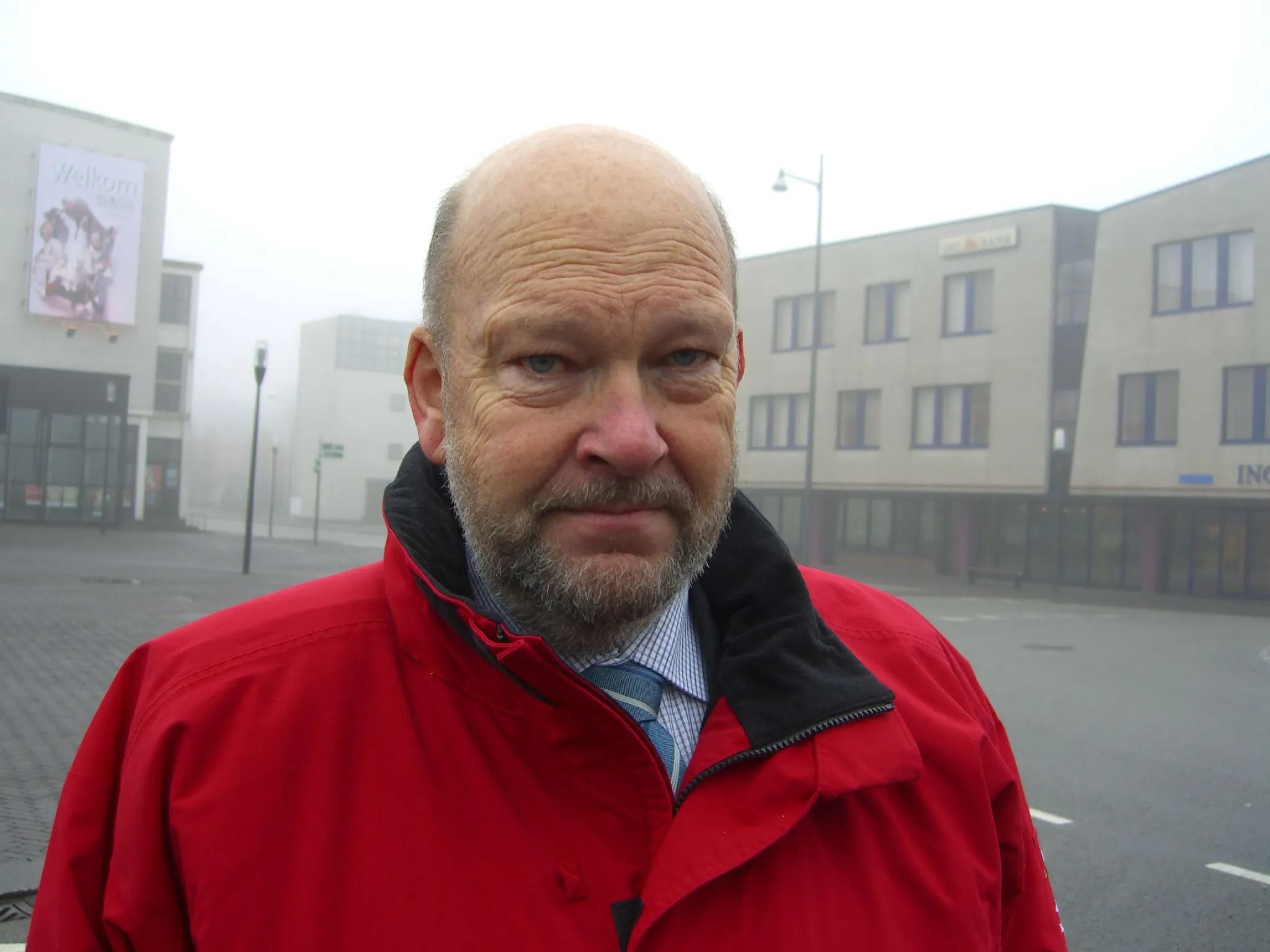
Without ever winning an election, Monderman had an effect on public space that went far beyond his job description. When he died in 2008, he was the face of an EU initiative to promote his ideas in other countries, there were more than a hundred shared space projects in the northern Netherlands,7 and plans based on his philosophy were ready to go from London to Auckland. By turning the right dials with a healthy dose of reforming zeal, he had made shared space a standard part of the international traffic engineer’s toolkit. Who knows how many lives it has saved.
What is policy entrepreneurship?
For most young idealists, the fate of a traffic junction in Drachten will not top the list of moral priorities. But the interesting part of Monderman’s story has nothing to do with traffic lights: what he teaches us is what becomes possible when civil servants think beyond their job description.
Nobody had asked Monderman to undertake his long march. He was not carrying out a diktat from The Hague; he had no mandate, no budget and no staff to put his ideas into practice. In fact, as an implementer who had taken the policymaker’s seat, he achieved his successes against all the usual relations of power.
There is a term for what Monderman did: he was a policy entrepreneur. The concept was popularised by Thomas Kalil, the man behind much of Obama’s innovation policy.8 A policy entrepreneur is an energetic actor, inside or outside government, who invests time, reputation or money to bring about a major change in policy. Monderman fitted that description to a tee. From an unimposing role as a regional traffic safety inspector, he managed to add his improbable ideas about road design to the international standard repertoire.
In doing so, he represented a personality type rarely associated with the civil service. The archetypal civil servant is someone who carries out a tightly defined set of tasks. His job description is clear, he dutifully carries out the assignments his boss gives him, no creativity is expected of him, procedures come first, and you are unlikely to see him leading the way with the latest trends.
In the public imagination, entrepreneurs are the opposite: figures without limits. Whether they are building a new quantum chip or an online shop, an entrepreneur has a goal and does whatever it takes to reach it. The entrepreneur leads the way, has to see opportunities where others miss them, and his or her role keeps changing.
Officially, then, there are no entrepreneurs in The Hague, apart from the cabinet and parliament. In civics class we all learned that politicians, as the people’s representatives, set the course and steer the civil service with direct orders. That constitutional logic may explain the impulse to organise everything in government as a waterfall: the top thinks, the bottom executes.
But good civil servants know that you can never build a good government with only this hierarchical way of working. When the knowledge and creativity at the bottom of an organisation are not used to help set the course, there are no shock absorbers when the professionals on the front line see things going wrong. Sometimes citizens fall through the cracks between departments. Sometimes the world around government changes so fast that the old way of working no longer suffices. In every case, things only really go wrong when everyone looks at their job description and concludes that it isn’t their responsibility. Then, somewhere, a Monderman – a motivated loner, a policy entrepreneur – has to stand up and decide that it is their problem.
Fortunately, in practice there are plenty of quiet heroes who swim against the waterfall to reform the institutions. The Delta Plan was ready within weeks of the 1953 North Sea flood because an engineer at Rijkswaterstaat, the national water authority, had worked it out years earlier without being asked – he published his warnings under the pseudonym Cassandra.9 The Netherlands came through the AIDS epidemic among drug users better than almost any other Western country because in 1984 Amsterdam started the world’s first needle exchange programme. The initiative did not come from the top but from the Junkiebond, the drug users’ union, itself; Amsterdam’s municipal health service decided to cooperate and then turned the approach into policy.10 And we ourselves know many civil servants who are reforming their organisations to build public works that dwarf even the most successful startups in impact and scale.
Hack your bureaucracy
To those who don’t work in the civil service, these examples may look like lucky strikes. But the opposite is true: there is method to the madness. Successful policy entrepreneurs use the same tricks to reach their goals surprisingly often. Those tricks are set out in Hack Your Bureaucracy, the bible of policy entrepreneurship in government.11
A small selection from the toolkit: be the one who writes the first document, because everyone after you builds on the version that already exists, and whoever writes it down gets to set the frame. Understand what your director is held accountable for, and shape your proposal so that it solves their problem. Don’t always go big straight away; start with a small version that shows it works, then scale it up. Make your initiative visible once you have the hard numbers. And seek out the other hackers in your department, because one civil servant with a dissenting idea can be ignored, while three form a front.
Hack Your Bureaucracy therefore contradicts the waterfall model: the misconception that change in large organisations has to come from the top. Government organisations are not a single whole but a collection of connected groups, each weighing every day what they stand to gain and to lose. Understanding which incentives govern these individuals is half the work for anyone who wants to put their organisation on a new track.
Reread Monderman’s story with Hack Your Bureaucracy in mind, and you see that his success follows the recipe to the letter. He started in hamlets nobody paid attention to. He measured the effects of every redesign with his radar gun until the evidence was irrefutable. He staged his own visibility by walking backwards into busy roads, with foreign journalists as his audience. And he then used that foreign attention as leverage back home: what London and Auckland adopt, The Hague can no longer dismiss as Frisian folklore.
A hidden path
Policy entrepreneurs, then, matter to the whole world – and yet very few young people consider it a career path. It doesn’t help, of course, that by definition it is a job you can’t apply for, because it isn’t in any job description. On top of that, the policy entrepreneur – unlike the tech founder addressing cheering crowds in a turtleneck – gets little fame or status. And money? Where a successful commercial entrepreneur at least drives home in a Lamborghini after a few decades of hard graft, someone who has saved the treasury billions simply gets on the train at the end of the day with the same lunchbox. All the benefits go to the public.
But that is exactly why policy entrepreneurs in government have so much to gain. On the free market, every commercial inefficiency is quickly exploited – there is money to be made from it, after all. On the idealistic path, that competitive mechanism doesn’t exist. For the public interest that is regrettable, but for individuals who want to make an impact it is a huge opportunity: on countless files nobody owns the problem, taking the initiative is risky and success is barely rewarded. The result is that enormous, solvable problems lie untouched for years while everyone who walks past can see them.
Anyone who is intrinsically motivated and willing to accept a role behind the scenes can get an enormous amount done with the leverage of the state. But the path of the policy entrepreneur is not reserved for civil servants. At the Delta Institute, our fellows work in much the same way. They can sink their teeth into a single subject for years, without being distracted by the issues of the day. They bring new policy plans to the attention of the media and politicians. And perhaps most importantly, they work with the policy entrepreneurs inside government, to add firepower to the projects that deserve it most.
Wherever you do it, the most important thing is knowing that it is an option to become a policy entrepreneur. Because behind every large system that doesn’t break down, or perhaps even works better than strictly necessary, there is probably a policy entrepreneur who fought for it. Anyone who hears the word ‘civil servant’ and pictures a paper-pusher who lives for meetings would do well to think of Hans Monderman now and then. And those who most despise the image of the paper-pusher should really become policy entrepreneurs themselves.